Photos and Freedom
by Lynda Goetz
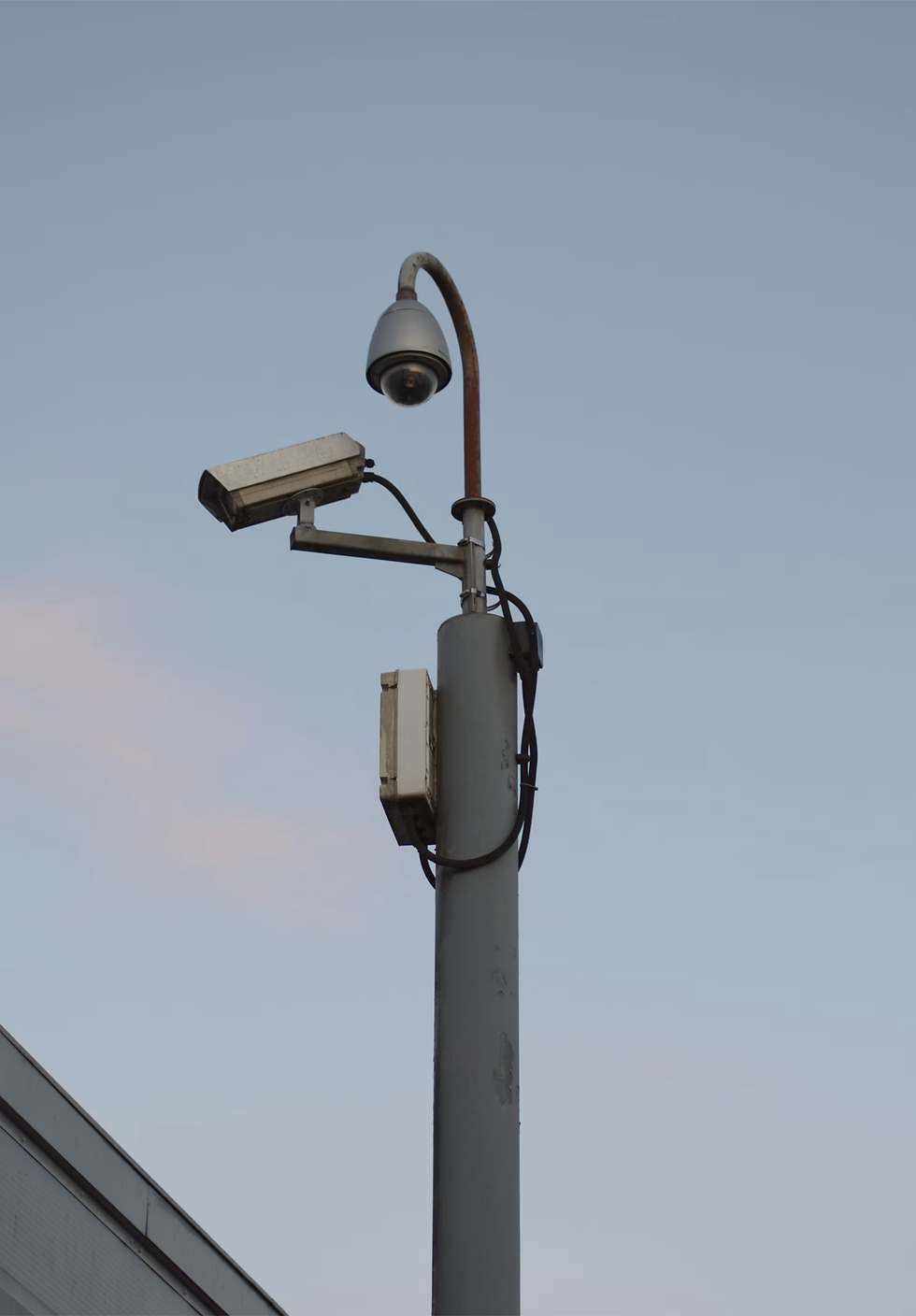
In August, fellow Only Connect writer, Eric Boa, whom I have never met, wrote an excellent and thought-provoking article entitled ‘Who said you could take my photo?’ . It prompted some further thought on my part about the way privacy and consent are now perceived and it would seem that there is both confusion and hypocrisy in the current thinking on this. There is concern that in publishing photographs of people, even those taken in public spaces, the photographer should have obtained consent. At the same time, we are all being photographed or filmed by public bodies and indeed individuals, in the street, on trains, on roads, in public buildings and on doorsteps. Closed-circuit Television (CCTV) is everywhere. Why is this somehow considered acceptable when it is no longer appropriate for an individual taking a photo unless formal consent has been given?
At the heart of this paradox is the idea, promoted by those in positions of power and authority, that CCTV is there for our protection and safety. Of course, to some degree this is true. It can be a means of identifying wrongdoers and those who are up to no good. Many criminals have been caught by the use of CCTV, the whereabouts of individuals ascertained, and their movements tracked by the proliferation of cameras in public places. Possibly some potential lawbreakers might even have been put off committing a crime by the knowledge that they could be spotted on camera. There seems to be a general consensus that, on the whole, CCTV in public places is a force for good and that “if you have done nothing wrong, you have nothing to fear”.
This is, however, a rather naïve view. It is all fine until the surveillance by the authorities becomes ever more intrusive. It is fine all the time we have a freedom-loving democracy. It is fine, until it stops being fine. Fine until we end up with an authoritarian government which uses the plethora of cameras installed with public approbation as just another method of government control. As most people already know, the country which watches its citizens most closely is China. China, according to Toolwatch has 10,343 cameras per 10,000 people. That’s more than one camera for every citizen. The US comes second and the UK third on this list, with respectively 2,239 and 618 cameras per 10,000 people. Interestingly however, the UK is ahead of the US in terms of the number of cameras in major cities, 628,975 to 112,206. According to another website, Platerecognizer, North Korea (another communist country) is more heavily surveilled than China, but the UK still comes third in the rankings, according to them, ahead of the US. Clearly there are different ways of interpreting the figures, but the fact remains that after some avowedly authoritarian states, the UK is high up there in terms of its population being subjected to constant monitoring by state or state-approved organisations. Are we really happy with this? If it is not OK to publish or take photos of others even in public places without explicit consent, why are people prepared to be subjected to constant photographic monitoring “for their safety and security”?
Think for a moment about the announcements you hear on trains: “CCTV is in operation on this train for your safety and security”. Really? How is it going to make your train journey safer? If, in the increasingly likely scenario of a blade-wielding fanatic in your carriage, who is going to come to your aid? There are in most cases no security guards or police on board the train. There might possibly be some British Transport police at the next station (how far away?). There might be some fellow passengers prepared to be heroes (although this is increasingly unlikely given their subsequent treatment*), but otherwise, all the CCTV cameras are going to provide is an ex post facto visual of the event - by which time, you and several others may well be dead or severely injured.
We clearly now live in a low-trust world where no longer are expressions such as ‘My word is my bond’ or ‘A gentleman’s agreement’ in any way meaningful. This is not something that has happened suddenly, but something that has crept up on us, slowly and insidiously until we reach the sudden realisation that this is the world in which we now live. Exhortations by the Duchess of Sussex and her ilk to ‘be kind’ cut little ice. The world of social media, virtual reality and surveillance cameras is not kind. It is intrinsically detached from humanity. It is impersonal. Photography was not so detached. Behind each camera was a human, in the same way as behind each aristocratic portrait painted was an artist. In these cases the purpose was to convey a message. This person is important/beautiful/wealthy/aspiring/marriageable, in the case of painted portraits or in the case of photographs, this person or people are living a different way of life from the one I know; they are engaging in unfamiliar activities, in unfamiliar surroundings; they are enjoying life or they are suffering.
CCTV has a very different purpose. It conveys no message. It is permanently recording, initially without judgement. Judgement only comes later. Someone is allocated to analyse the images. No creativity is involved. Does this make it more acceptable, or less? Personally, I find this far less acceptable. I would much rather be an image, a stranger, in some Japanese tourist’s random picture of London or the rural Cotswolds than yet another citizen under surveillance by my own or any other government organisation. Although it is easy to understand the trust put in CCTV for safety and security and it is clear that it can provide ‘ex post facto’ evidence, in many cases, of unacceptable civil or criminal behaviour, it is also part of an increasingly monitored world where state intrusion into every aspect of our lives has become normalised and tolerated. It would be preferable, in my view, to expect that fellow citizens would come to one’s aid in any given situation rather than to know that justice might (perhaps) be meted out to the perpetrators at some very much later date as a result of someone trawling though miles of CCTV, dashcam or bodycam footage. However, this being the world in which we now live and surveillance being very much a part of that world, it seems entirely odd and unjustifiable that an individual citizen’s photos taken in a public place should be rejected for publication on the grounds that express consent was not given.
* e.g the incident In August 2025 when three men were prosecuted by British Transport police for “assaulting” a man who was exposing himself on a tube train. It took a year before the British Transport police were forced to drop proceedings when the Crown Prosecution Service declared there was no possibility of a conviction.



I used to be a fan of CCTV - now I think that increasingly it is used against citizens to bolster an insidious political viewpoint that does not fit well with many in the UK.