Who said you could take my photo?
Updated: Aug 14
by Eric Boa
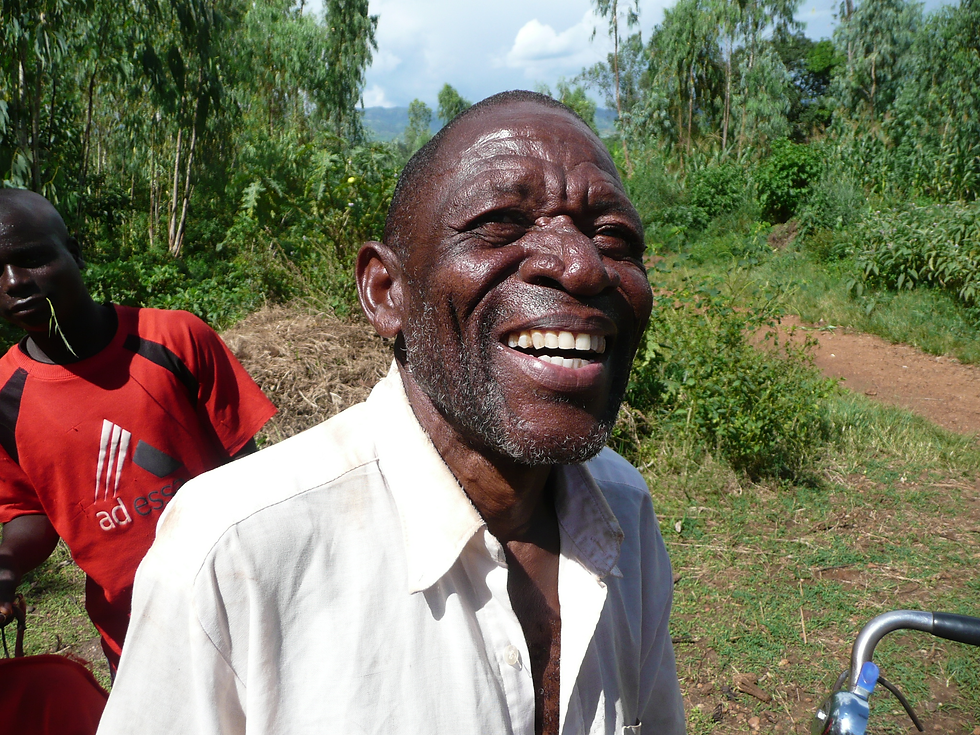
The Boa Photo Library has around 150,000 images, the result of sixty years of photography. No need for our editor to find free-to-use images for my articles. I’m my own photo agency, happy to share photos and get the most use out of them. Around half of the images are work-related, with people, plants and places connected to agriculture and the wider environment. Mostly from the Global South (or Low Income Countries – I’m never quite sure what term to use these days) but also Europe and North America.

I took lots of pictures of people living and working in rural places. Smallholder farmers and their families feature prominently, as does a large cast of researchers, extension officers (agricultural advisors) and students. I’ve always found markets fascinating and the photo library includes many examples of vendors and their goods.
My general purpose was to illustrate and celebrate the everyday efforts of people going about their daily business - cacao farmers in DR Congo, harvesting onions in the Dominican Republic, picking tea in Sri Lanka, growing black pepper in Borneo (instead of illegal logging), cut-flower production in Colombia, and truffle hunting in Spain and Italy. I’ve used the images regularly in scientific publications, reports and blogs and shared them with colleagues.
I also took photos of record – training courses, field visits, workshops and the like. I haven’t counted the number of individuals that appear in my images but it’s easily in the thousands. Most subjects were aware of being photographed. Others were looking elsewhere, or bystanders, or members of the public present at an event. I also liked to capture unguarded moments. They reveal different things to the knowing look of an engaged subject. I watched closely, from a distance, as a woman in Central Java attached her market purchases to a small motorbike, ensuring there was space for herself, her daughter and grandmother. The sequence of photos I took demonstrate not only her skills, but what shopping for food involved.

It’s inevitable that general shots of people will contain jarring elements. British documentary photographer Martin Parr’s photos often juxtaposed the serene with the shabby: a well-dressed couple eating fish and chips at the seaside alongside a pram with a baby, an overflowing rubbish bin and chips scattered on the pavement. He rarely obtained informed consent, arguing that public spaces were, well, public. I have people with smiling, happy faces in bleak and threadbare settings. They might have objected to the background but I’ll never know. And they were also in public places.
I don’t claim any particular skills as a photographer. I’m no Steve McCurry, who took the famous portrait of an Afghan Girl with piercing eyes, or a Cartier-Bresson, he of the “decisive moment”. But I’m proud of the people I’ve photographed and pleased when others comment on them, including the subjects. Pre-digital era, I went back on several occasions to show people prints of the photographs I’d taken of them. Reactions varied. Market folk in Yogyakarta squealed with delight, some self-consciously, when shown themselves and fellow sellers. Tribal folk in the south of Bangladesh were indifferent or bemused. I wondered if they’d ever seen themselves in photographs.
I can’t remember receiving any objections about images, either from subjects or by other people – mostly colleagues – on their behalf. It’s the other ‘others’ who’ve stoked the debate about informed consent, particularly in the context of the Global South. In recent years I’ve been asked to confirm by publishers that the people in my photographs have given informed consent. It’s not a new requirement. Fashion models sign release forms which regulate how their images are used. Why is something similar then needed for ordinary people doing everyday things?
People I’ve photographed live in poor countries, often in meagre dwellings and in basic circumstances. Where I worked was a million miles away from places of extreme human suffering and tragedy associated with conflict and natural disasters. The on-going debate about informed consent stems from genuine concerns about how people are portrayed in extremis. ‘Poverty porn’ implies exploitation and misrepresentation of people in dire circumstances. The intentions of those taking and publishing such photos is ostensibly to evoke sympathy and help fund relief efforts. But it also raises questions about dignity and the right to say “No” to the camera. Was Harry Benson, a photojournalist, right to take a photo of Ethel Kennedy screaming at him (and others) to ‘give air’ to her husband, Robert Kennedy, who later died from an assassin’s gun? Informed consent anyone?
Digital photography has contributed to a crisis of what can and can’t be shared. The ubiquity of phones has made everyone a photographer, quickly able to share images anywhere at any time. This is not the world I worked in. I suggested an image of a lady in Rwanda looking at a cassava root to accompany an article. She was neither happy nor sad and showed no signs of distress or awkwardness in front of the camera. There was nothing demeaning or degrading about her posture. Yet the publisher wanted proof of consent. The photograph was rejected.
Now I wonder about all the other people photographs I’ve got. Raimunda, a female farmer in Bolivia, asked me to take her portrait. She’s seated, staring straight at the camera. It’s an engaging image, taken with cooperation and not coercion. I’d be sad if it couldn’t be published without concrete consent from Raimunda.
Which leads me to wider thoughts on my photo library. The burden of proof of informed consent appears to fall on me. Should I get future subjects to sign a form? Or collect contact details if the photograph is used in a publication, however limited the readership? Noble ideas, yet cumbersome and counter-productive, compromising the ability to portray real people and real events.
Am I the right person to judge if implicit consent has been given? If asked, people might object to unflattering lighting, the look on their face or even the clothing they were wearing. I will think harder when sharing photographs of people I don’t know.
Friends are another matter. I took a photograph fifty years ago of a fellow rugby player at university jumping naked into an outdoor swimming pool. It appears in a reunion photobook. The friend later became a highly regarded headmaster at a major private school. There was no informed consent and we’re still friends (I did block out his private parts).
Was I always scrupulous in respecting the wish of strangers not to be photographed? A woman weeding in a rice field in Rwanda, tired and muddy, hand on hip, glared at me as I took several photos. A man in a market in north Nigeria stormed across to the Toyota Land Cruiser where I was sitting in the back seat, subtly (so I thought) taking photos of goods and transactions. He remonstrated with me as I tried to explain he wasn’t the target. I have a sequence of photos showing a man having a bucket shower on a ferry, soap and all. His friends thought this was hilarious. He didn’t’.
I haven’t published any of these photos and I would only use them in a personal capacity, as part of photobook to show to family and friends. I have transgressed, though unwittingly. An article I wrote for New Scientist, a popular magazine, featured my friend Martin McColgan bare-chested, smiling as he flexed his arm muscles during a forest walk. At the time the article appeared – back in the 1980s – Martin was teaching history at a private school in Aberdeen. New Scientist had a circulation of just under 100,000. He took his unexpected and, of course, unapproved appearance with good grace. I’d ask his permission before doing this now.
I hope that people in my photographs would recognize a respect and a lack of malice, even when shown in awkward circumstances, and share my desire to show life in neglected and forgotten places. These were the general principles used in perhaps the greatest concerted attempt to depict the lives of poor and downtrodden folk. The Farm Security Administration (FSA) was established in 1935 in the USA to help resettle destitute farmers and their families. They hired a small band of photographers, several of whom became globally famous - Dorothea Lange, Gordon Parks, Walker Evans - to publicise the work of the FSA and the dire circumstances of the people they were trying to help.

Perhaps the most striking of the photographs is Migrant Mother, taken by Dorothea Lange. I didn’t realise until now the effort taken by Lange to get the best pose and composition, one which showed dignity in the face of despair and drudgery. The mother was working on a pea farm. Lange not only manipulated the woman and her children but later retouched the photo to remove an errant thumb. It’s clear, at least from Lange’s account, that she was a dedicated and compassionate person. The result is one of the most outstanding photographs of the Great Depression, one that helped convince politicians to fund the work of the FSA and improve the lives of the destitute. Was there informed consent? No.


There are two separate issues, I think: getting permission to take the photo, which would be done (or not) on the spot and is in most cases clear-cut, and getting permission to publish the photo, which is much muddier and in particular can involve the power/money differential between the photographer and the subject. I remember a stay in Rumphi in northern Malawi, where I was taking photos in the local market: several of the stallholders were happy to be filmed AFTER I asked permission, but in one case I was positioning the camera for a shot - not planning to take it until I had asked permission - and the stallholder shouted at me to stop taking his photo. Ther…
An interesting article, Eric and a subject I too have considered recently as attitudes have changed. Lynda Goetz