Humans should stay where they belong
by Mark Nicholson
I was in the gym last Tuesday, cycling like a hamster in a wheel, when one of the boxing instructors came up for a chat.
“What do you think of Tyson, daktari?” he asked.
“A nasty piece of work in the ring or out of it, but an amazing boxer and today is his 60th birthday” I replied.
“No, not that one, the star fellow”.
I was astonished that my trainer should have heard of him but You Tube gets everywhere these days (except into my forest).
“Why”, I inquired.
“Because I have some questions and I know you like science”. He wanted to know why humans want to get to Mars rather than to another planet in our solar system when we have so many issues on Earth.
He was talking about the US American astrophysicist and science communicator Neil deGrasse Tyson who is one of the natural successors to Carl Sagan, a childhood hero of mine. In Britain, his equivalent would be Brian Cox. Tyson explains astrophysics and astronomy in such uncomplicated and interesting language.
I did watch Artemis ii, the latest moon mission, with great interest and was in awe of the concatenation of the physics and the mathematics with the technological progress and the flawless engineering (except for the loos). It was an impressive mission but the only thing which I found redundant was the need to send astronauts. Humans are expensive and heavy additions, being resource-demanding, needing oxygen, food, and water. They are also embarrassing to lose, so I predict that humans will soon be unnecessary in space exploration.
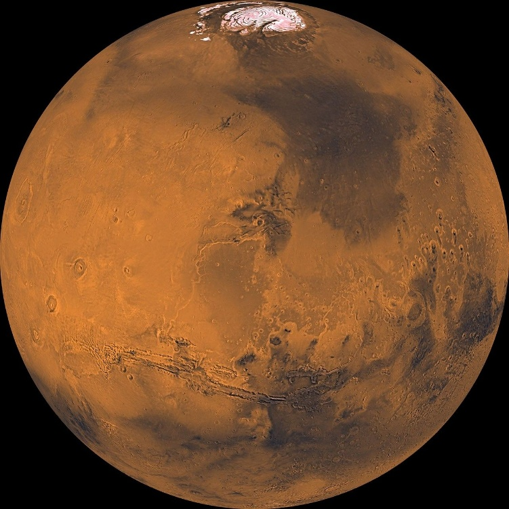
Mars is next on the list for human travel. Actually, it is the only one left on the list. As Patrick Moore once said, if you set foot on Venus, you would be poisoned, squashed, dissolved and fried in one second. Mars is relatively benign by contrast but still an alien world. At its closest, it comes to within 35 million km from us every 26 months and at its furthest, it is over 400 million km away. To get there will take three years at current speeds: 40,000 kph. sounds fast but it is actually snail’s pace in terms of the speeds that would be needed for further exploration in space. Anyway, can anyone really look forward to the prospect of traveling with two other colleagues for the six-year return journey in a container the size of a campervan? The answer presumably is yes, because there is no shortage of volunteers at NASA and SpaceX. But the journey alone is surely fraught with risk, chiefly from the effects of radiation and weightlessness.
On arrival on Mars, a human would need to scamper for shelter. The cold will get you first, averaging -80o C owing to the thin atmosphere of mainly C02. .The absence of a strong magnetic field means that chronic radiation levels would be dangerously high and there would be no protection against occasional electromagnetic bursts from the sun which would cause acute radiation death. Any chance of survival would mean a fossorial existence deep underground. The other problem would be the low gravitational force on Mars’ surface, which is about one-third of that on earth. It has taken millions of years for terrestrial species to adapt to gravity at sea level. While it might sound fun to weigh only 20-30 kg on Mars, it will cause muscular atrophy and loss of bone density. The higher blood pressure would also be bad for the eyes and the brain, Hours of daily exercise would be needed to counteract these effects. A long spell on Mars would weaken the heart and make the return to Earth’s gravity extremely dangerous.
Let’s move on to space travel. Call me a killjoy but I have never watched a film about space travel or star wars, whether it is 2001 Space Odyssey or Star Trek, without bursting into laughter at the total absurdity of it all. I know these films are for entertainment but they allow human imagination to stray into the realm of fantasy.
Most humans have a very narrow spectrum when it comes to imagining size and speed. Forty million kilometres sounds quite far to our neighbouring planet but in astronomical terms, it is nothing. If there were life on another planet outside of our solar system (known as an exoplanet), and I guess that there is, it would be useful to look for one with conditions similar to those found on Earth in what is called the Goldilocks zone, an area where it is neither too hot nor too cold and with a reasonable chance of liquid water. The now retired Keppler telescope found about 2,500 candidates, the nearest of which (Proxima centauri b) revolves round our closest star after the sun, Proxima Centauri which, on the equator and southwards, we can see most of the year. It is 4.2 l.y[1]. away and probably uninhabitable from lethal radiation. Astronomically speaking, it is so close we could touch it[2]. So how far is 4.2 l.y.? If you insist on the distance in kilometres, it is roughly 39,735,000.000,000 km. away. Yes, that’s 40 trillion (or 4x 10¹³ km.), well over one million times further away than Mars. To compare the distance from us to the Red planet against the distance to our nearest exoplanet, imagine the end of your nose being the Earth and your thumb at the end of a straight arm being Mars at its closest to us[3]. On the same scale, our nearest exoplanet would be the distance from Paris to Madrid (1038 km).
If Mars takes three years to get to at the current speed of space travel; Proxima Centauri b would take 78,000 years. If our technology could increase spaceship speeds towards the speed of light, time itself gets grossly distorted. The time the astronauts have been away as measured by our clocks and by theirs would be totally different, as predicted by Einstein a century ago. Anyway, imagine responding to an urgent call for help from an astronaut who would have to wait eight and a half years for a reply.
A more distant (but still very near) exoplanet (K2-18b) which has the greatest chance of having conditions closet to ours on Earth is 124 light years away. If Captain Kirk insists on nipping across to the nearest major galaxy to the Milky Way, Andromeda, 2.5 million l.y. distant, it would take him 3 million years traveling at close to the speed of light. The newer James Webb telescope recently found MoM-z14 galaxy at 34 billion light years from us.
So back to our little Solar system. We will undoubtedly be needing the minerals found both on Mars and on our moon. Robotics and AI are making such rapid advances that I can see little advantage in sending astronauts into space. Is it vanity that propels humans to space? Or just our innate need to explore? And if we do get to Mars, who does it belong to? If the Chinese and the Americans get there at the same time, do they stake a claim and how long will it be before the only real Star Wars are actually a fight between humans of different nations trying to take control of resources on another planet. Are we unselfish enough to share the resources from another planet when we can’t do it on this one? I doubt it.
I do not think I will see a survivable human expedition to Mars and back again in my lifetime. I say ‘back again’ because there is also a huge technological challenge of finding enough fuel on Mars to propel a spaceship back again to the Earth. Likewise, I do not think we will ever see humanity reaching even the closest exoplanet. I may be wrong but we are facing enormous environmental challenges on this planet which threaten our existence and we are deluding ourselves if we think that when we’ve trashed this planet, we can zoom off and settle another one.
Let’s get to Mars and mine the Rare Earths for our computers but let’s use robots to do the work. Yes, I would love to see Mons Olympus, which is over two and a half times the height of Everest but I’m quite happy to see it from the comfort of my armchair on the only benign planet we know of. But if there is one question that still fascinates me about Mars it is whether there was ever once a life form on the planet. That question still remains unanswered.
[1] A light year is a unit of distance (not time) being the distance light travels in space in one year, 9,460,730,472,580.8 kilometres (9.46 × 10¹² km). Einstein verified that the speed of electromagnetic radiation (which includes light), about 3x10⁵ km/s, is the fastest possible speed in nature.
[2] our own modest-sized galaxy, the Milky Way is 100,000 l.y. across.
[3] For the historically inclined, the Imperial ‘yard’ was defined as the distance from the end of Henry I’s nose to his thumb.


![መልካም አዲስ ዓመት[1] Happy New Year 2017](https://static.wixstatic.com/media/2a5550_b9c9aae7393e472087db0a5e55cb6f81~mv2.png/v1/fill/w_980,h_490,al_c,q_90,usm_0.66_1.00_0.01,enc_avif,quality_auto/2a5550_b9c9aae7393e472087db0a5e55cb6f81~mv2.png)
Comments