Ebola: A virus worse than Covid
by Dr. M. Nicholson

Structure of a Filoviridae virus such as Ebola
About 30 years ago I watched a film with Morgan Freeman and Dustin Hoffman about a lethal virus from Africa that was inadvertently released into a small town in California after a pet monkey had been smuggled into the USA. Google has reminded me it was called Outbreak and the fictional virus in question was called Motaba. The producer had obviously heard of a haemorrhagic disease which first appeared 20 years earlier, simultaneously in Sudan and in what was then Zaire. The virus was named after the Ebola river. There was another outbreak in Sierra Leone, Liberia, Guinea and Guinea-Bissau some ten years ago where more than 25,000 people died out of the 27,800 people infected. This year a more dangerous strain of Ebola has appeared called Bundibugyo in the Democratic Republic of the Congo (DRC) and is spreading fast and by no means under control. But just how dangerous is it?
The virus is clearly sylvatic in origin as I am certain SARS-CoV2 was, in spite of all the conspiracy theories. I would even put money on the fact that it comes from bats for reasons which require another article. There is a very similar haemorrhagic disease called Marburg, which has been recorded in Kenya and definitely originates from bats. The case mortality is also over 90%. I have often been in the caves on Mt. Elgon where the bats live, both before and after someone was infected and died. HIV also is believed to have originated in Central Africa and possibly became a zoonosis after humans feasted on chimpanzee meat.
I am continually surprised how frequently people confuse bacteria and viruses. They are in fact chalk and cheese. Bacteria are living organisms visible using a light microscope. They are mostly controlled by antibiotics, the misuse (particularly late-stage underuse) of which leads to bacterial resistance. A virus is a piece of either DNA or RNA that can only replicate in the host’s cells. Most viruses are usually 10 and 100 times smaller[1] and only visible under a more powerful electron microscope[2]. They are usually wrapped in a protective shell called a capsid. Some viruses are deadly for humans (e.g. rabies) but cannot to transmitted between humans. Conversely, others, like colds, are fairly innocuous but rapidly transmissible through aerial infection. A virus is not controlled or affected by antibiotics and requires medicines that reduce but cannot usually destroy the viral load. A good example are the High Activity Anti-retroviral therapies (HAARTs) given to HIV positive patients to prevent AIDS developing.
To compare the virulence of Ebola with COVID-19, let us look at the data. The overall confirmed case fatality rate for COVID-19 globally is around 1% among reported cases, though the true infection fatality rate. which includes asymptomatic and unreported cases. is much lower (0.1-0.5 percent) varying significantly by variant, vaccination status and age of patient. In contrast, the fatality rate of untreated Ebola is between 30 and 90 percent. Ebola is 300 to 900 times more likely to kill you than COVID-19.

Five days ago, a Kenyan man arrived at Nairobi airport from Entebbe in Uganda. Prior to that, he had driven from Buta in DRC and stopped off in Kampala. He was tested on arrival for signs of fever but got through the health check after which his family drove him to hospital. 48 hours later, he died and Ebola was confirmed.
Some here are already questioning the efficacy of the health check at the airport but this is unfair. One cannot perform a rapid diagnostic test on all arriving passengers at the airport and it is not very reliable. The Gold standard is a reverse transcriptase polymerase chain reaction (RT-PCR) blood test to detect viral RNA, which is expensive and takes time. All one can do is check the temperature and look for malaise in the passengers. Symptoms of Ebola appear 2 to 21 days after someone is exposed to the virus and begin with fever and debility. There can then be an asymptomatic period before the serious exudative symptoms appear such as bleeding, diarrhoea and vomiting as seen in all haemorrhagic fevers.
So, what next? The USA already paid for an Ebola quarantine centre in Nanyuki in Kenya which resulted in a lot of rioting (with three deaths from police shooting) because, understandably, people asked why there should be a quarantine centre when there were as yet no cases in Kenya. The current situation is that all the relatives and contacts of the deceased, plus the flight crew and all the passengers on the plane have been quarantined. I would not be keen to travel on that plane before it is thoroughly sterilized because fomites could persist on plastic and other surfaces. Travel advisories for Kenya have been posted by the USA and European countries which will affect tourism but with luck, there may be no more cases. In addition, while there is no cure for Ebola, good supportive care and symptomatic treatment is available in good hospitals here, which will greatly reduce the death rate. Uganda already had some cases and has now declared itself free of Ebola.
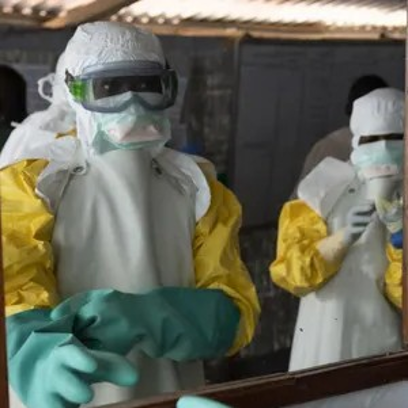
Ebola is unusual in that the highest transmission rate of the virus takes place in the dead body when exudates show very high viral loads. The body has to be buried usually by family members who then themselves are exposed to the virus. Those disposing of bodies have to be quick and extremely well-protected to avoid infection and protective suits are often not available. Traditional burial rites have to be prevented and this causes tension and hostility between international health personnel and local tribes. At least 550 health workers have died of Ebola in the last two outbreaks.
The main centres of infection at the moment are in Congo, South Sudan and Central African Republic, where ignorance, weak medical infrastructure, insecurity and rebel groups make this situation very much worse, which is why the current outbreak is far from over. How much worse could it get? Could a new strain become a pandemic?
Who or what is the most likely to finish humanity? The candidates include a nuclear war, climate change, Artificial Intelligence/Super-Intelligence, a pandemic, an asteroid or similar extraterrestrial event. It may even be the next Ice Age for all we know. I’m not actually a great believer in apocalyptic finales. All these may take their toll but human extinction would probably be accompanied by the extinction of all terrestrial animals. Even the Black Death only killed 30 to 60 % of the world’s human population. HIV/ AIDS killed around 11 million; Spanish ‘flu killed 20 million. So most of these catastrophes would just reduce human populations. Unless of course AI stepped to create a virus so deadly and rapidly transmissible that Science and Medicine could not keep pace. Maybe it’s time for another film - Outbreak 2.

[1] Usually ranging 20-100 nanometers (nm). An nm is one billionth of a metre.
[2] I was 17 when I first saw a virus under an electron microscope in 1967 in a research lab in Slough, UK. At that stage, it was still an exciting new instrument.


Comments